The once and future King
Introduction: More Than Just a Sword in a Stone
We all know the highlights: the sword in the stone, the wizard Merlin, the Knights of the Round Table, and the tragic betrayal that brought Camelot crashing down. The story of King Arthur is practically baked into our DNA. It’s the ultimate tale of heroism, magic, and brotherhood.
But where did this massive, sprawling legend actually come from? And why, over a thousand years later, are we still talking about a guy who may or may not have actually existed?
Here at King of Beards, we appreciate a good legacy. Today, we’re diving into the origins and the enduring meaning of the Arthurian legend—and what it still has to teach the modern man.
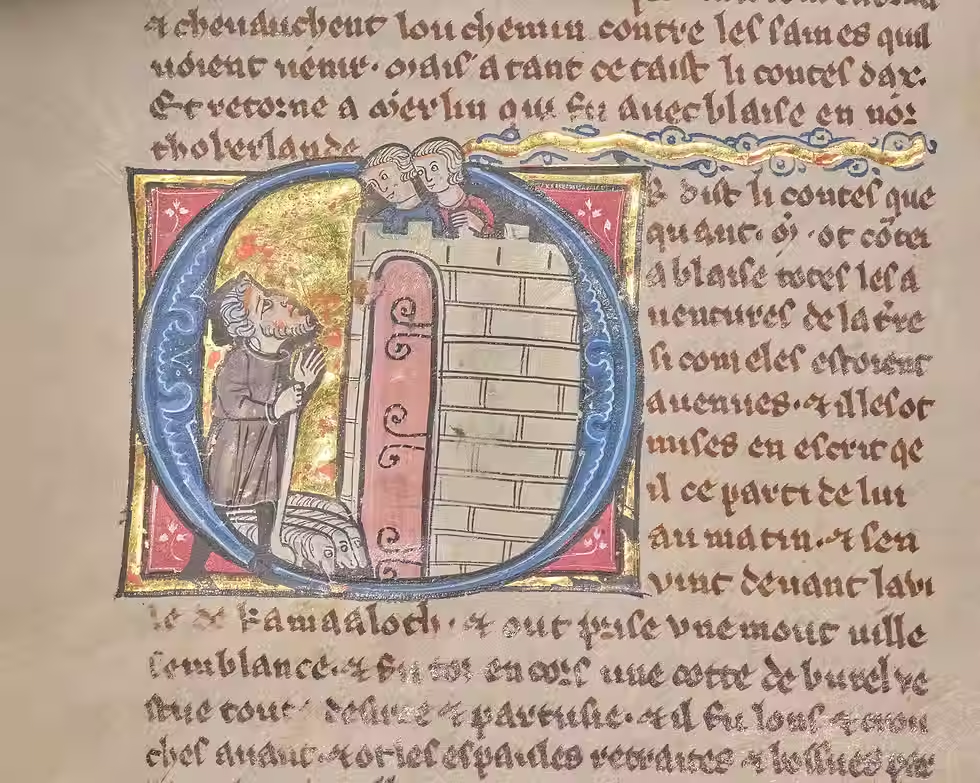
The Gritty Origins: The Warlord in the Mud
If you picture King Arthur, you probably see a guy in shining plate armour sitting in a towering stone castle. The historical reality (if there is one) is a lot grittier.
The roots of the Arthurian legend go back to the "Dark Ages"—specifically 5th and 6th century Britain. After the Roman Empire packed up and left, Britain was left vulnerable to invading Anglo-Saxons. The earliest historical references don't speak of a king in shining armour, but of a fierce Romano-British military leader—a warlord—who successfully rallied the Britons and fought back the invaders at the Battle of Badon Hill.
This early Arthur was a man of the mud and blood. He wasn’t about courtly romance; he was about survival, grit, and defending his homeland. Over centuries of oral storytelling around Celtic hearth fires, the deeds of this battle-hardened commander were exaggerated, mythologised, and blended with ancient Celtic gods and folklore.
The Evolution: How a Warlord Became a Legend
The Arthur we recognise today was essentially "invented" in the 12th century by a Welsh cleric named Geoffrey of Monmouth. He wrote the History of the Kings of Britain, which introduced Merlin, the sword Excalibur, and Arthur's betrayal by his nephew Mordred.
But it was the French writers—specifically Chrétien de Troyes—who gave the legend its modern swagger. They added the shiny armour, the chivalry, Lancelot, and the quest for the Holy Grail. Suddenly, Arthur’s court wasn't just a military camp; it was Camelot. It became an idealised world where strength was balanced by honour, and might was used to protect the weak.
Finally, in the 15th century, Sir Thomas Malory penned Le Morte d'Arthur while sitting in a prison cell. Malory compiled all the scattered myths, French romances, and Welsh poetry into one massive epic, cementing the English version of the legend forever.

My final thoughts
If you ask me, I will always choose the romanticised version of the legend. The sword and sorcery—the magic of it all—is something I almost believe to be fact. Maybe it’s the escapism I remember from childhood, or maybe it's just looking out at how mysterious and wonderful these isles are. It just makes sense.
We know swords have been pulled from our lakes and rivers, and even found struck into rocks. The Druids walked this land long before us, and a certain kind of magic is still prevalent today. I choose to believe the knights still sleep under a mountain, Merlin is still locked in his tree, and Arthur is out there, waiting for our time of need.
Until that day comes, we keep the legacy alive. Keep your sword sharp, your honour intact, and your beard legendary."



Comments